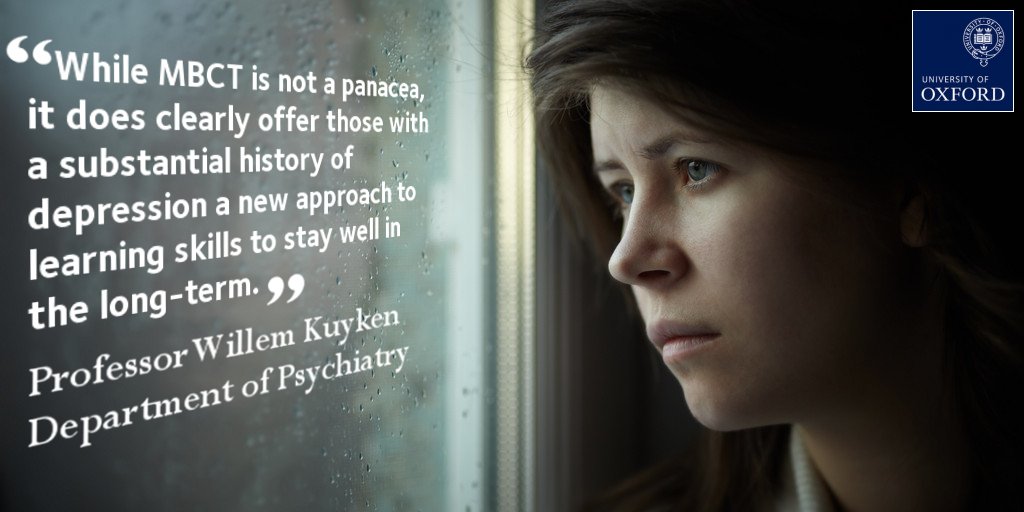
Mindfulness is making the news
these days. It has been depicted in the media primarily as a tool to
hone attention, to cultivate sensory awareness, and to keep us in the
present moment.
Developing these tools takes effort and
determination, but why is it we can sometimes be mindful without really
even trying? Perhaps we were naturally mindful at points in life before
we ever learned what mindfulness was. Maybe we feel naturally connected,
present, and at ease in nature. Or we become mindful while talking
authentically with a friend, or in the midst of music, art, or athletic
activity.
Mindfulness is not only a meditation technique, but
also a state of being. This state is available to anyone; it is a
natural human capacity. Mindfulness practice, as a tool, is tremendously
helpful to cultivate this awareness, and the state can arise at any
moment. Mindfulness is also connected to a set of powerful outcomes:
happiness, emotional regulation, compassion, altruism, and kindness.
We
encourage you to attend an array of offerings to cultivate the
moment-to-moment awareness, which is the foundation of our practice.
An analysis of old studies suggests LSD may have a role to play in treating alcoholism.
The powerful hallucinogen LSD (lysergic
acid diethylamide) has potential as a treatment for alcoholism,
according to a retrospective analysis of studies published in the late
1960s and early 1970s.
The study1,
by neuroscientist Teri Krebs and clinical psychologist Pål-Ørjan
Johansen of the Norwegian University of Science and Technology in
Trondheim, is the first-ever quantitative meta-analysis of
LSD–alcoholism clinical trials. The researchers sifted through thousands
of records to collect data from randomized, double-blind trials that
compared one dose of LSD to a placebo.
Of 536
participants in six trials, 59% of people receiving LSD reported lower
levels of alcohol misuse, compared to 38% of people who received a
placebo.
“We were surprised that the effect was so clear and
consistent,” says Krebs. She says that the problem with most studies
done at that time was that there were too few participants, which
limited statistical power. “But when you combine the data in a
meta-analysis, we have more than 500 patients and there is definitely an
effect,” she says. In general, the reported benefits lasted three to
six months. Their findings are published today in the Journal of Psychopharmacology.
Psychedelics
were promoted by psychiatrists in the 1950s as having a range of
medical uses — to treat conditions such as schizophrenia, for example —
before political pressures in the United States and elsewhere largely
ended the work.
“Alcoholism was considered one of the most promising
clinical applications for LSD,” says Johansen.
Alcoholics Anonymous
co-founder Bill Wilson is said to have espoused the benefits of LSD
in
the book Pass It On: The Story of Bill Wilson and How the AA Message Reached the World.
In
the last decade or so, however, a new generation of researchers have
been interested in harnessing the therapeutic benefits of illicit drugs —
such as (MDMA or ecstasy) 3,4-methylenedioxymethamphetamine (MDMA or ecstasy) for
post-traumatic stress disorder, ayahuasca for drug and alcohol
dependency, and psilocybin, the active ingredient in hallucinogenic
mushrooms, for smoking cessation.
The snow globe of perception?
How
psychedelics exert such effects, especially after a single dose,
remains unclear. LSD and its chemical cousins share structural
similarities with the neurotransmitter serotonin, which is linked to
many aspects of mood, memory and pleasure. These psychedelics also bind
the same receptor sites in the brain as serotonin, but there the
similarity may end — studies have shown that the hallucinogens elicit
chemical cascades different from other compounds that bind at the same
receptor2. To complicate matters further, LSD also acts at other receptors3.
For
the moment, studying human behavioural responses rather than brain
chemistry may be more helpful in understanding how the drugs work.
Robin
Carhart-Harris, a psychopharmacologist at Imperial College London who
has researched how psilocybin could treat depression, says that
psychedelics must work at both biological and psychological levels.
“Psychedelics probably work in addiction by making the brain function
more chaotically for a period — a bit like shaking up a snow globe —
weakening reinforced brain connections and dynamics,” he says.
Roland
Griffiths, a behavioural biologist at the Johns Hopkins University
School of Medicine in Baltimore, Maryland, is investigating the
influence of psilocybin on smoking cessation, and says that psychedelics
sometimes give rise to distinctive, insightful experiences that can
produce enduring positive changes in attitude, mood and behaviour.
“This
is impressive and important work,” says Matthew Johnson, a psychiatrist
also at Johns Hopkins University who is now running a small trial
looking at the effectiveness of psilocybin to treat nicotine addiction.
“Although this meta-analysis does not replace the need to test the
approach in new, well-designed and rigorous clinical trials, it puts
some more muscle behind the interpretation that the older literature
shows hints that psychedelic therapy might really help addiction.”
However,
Ken Checinski, a consultant addiction psychiatrist and independent
researcher based in London, says that although the results are exciting,
no pharmacological treatment should be seen as a magic bullet and that
modern therapeutic techniques have improved. “The included LSD trials
pre-date the use of psychological techniques such as motivational
interviewing and cognitive behaviour therapy,” he says.
Why
are some able to transcend their addiction while others are not? What
do people really need to escape the shame of their addiction and achieve
sustained recovery? Jacki's talk focuses on answering these questions
and demonstrates how resilience of the human spirit intersects with
social contextual factors to set the stage for those struggling with
addiction to choose a pathway to health.
A malfunctioning enzyme may be a reason that binge drinking increases the odds of alcoholism, according to a study by scientists at the Stanford University School of Medicine.
The scientists identified a previously unsuspected job performed by the
enzyme, ALDH1a1, in mice. The discovery could help guide the development
of medications that extinguish the urge to consume alcohol, said Jun
Ding, PhD, assistant professor of neurosurgery.
Ding is the senior author of the study, which will be published Oct. 2 in Science. The study's lead author is postdoctoral scholar Jae-Ick Kim, PhD.
Alcoholism is an immense national and international health problem. More
than 200 million people globally, including 18 million Americans,
suffer from it. Binge drinking substantially increases the likelihood of
developing alcoholism. As many as one in four American adults report
having engaged in binge drinking in the past month.
Existing medications for treating alcoholism have had mixed results.
Disulfiram (Antabuse) and similar substances, for example, work by
inducing unpleasant side effects -- including shortness of breath,
nausea, vomiting and throbbing headaches
-- if the person taking it consumes alcohol. "But these drugs don't
reduce the craving -- you still feel a strong urge to drink," Ding said.
In the new study, Ding and his associates showed that blocking ALDH1a1
activity caused mice's consumption of and preference for alcohol to rise
to levels equivalent to those observed in mice that had experienced
several rounds of the equivalent of binge drinking. Restoring ALDH1a1
levels reversed this effect.
Previous studies have shown that mutations in the gene for ALDH1a1 are
associated with alcoholism, but the reasons for this have been obscure. A
key finding in the new study is that in certain nerve cells strongly
implicated in addictive behaviors, ALDH1a1 is an essential piece of a
previously unknown biochemical assembly line for the manufacture of an
important neurotransmitter called GABA. Neurotransmitters are chemicals
that bind to receptors on nerve cells, promoting or inhibiting signaling
activity in those cells.
GABA is the brain's main inhibitory neurotransmitter. It was previously
thought that GABA was made in mammalian brains only via a different
biochemical assembly line that doesn't involve ALDH1a1.
An alternative assembly line
While GABA is produced widely throughout the brain, the novel
GABA-production assembly line identified by Ding's group was observed
only in a group of nerve cells known to play a powerful role in addiction.
The new finding has potentially great clinical significance because a
drug that could increase GABA synthesis through this alternative
assembly line -- by boosting ALDH1a1 levels in the brain -- could
potentially restore the balance in neural circuitry that's been thrown
out of kilter by excessive alcohol consumption without dangerously
elevating GABA levels elsewhere in the brain.
Another neurotransmitter substance, dopamine, is famous among
neuroscientists for its involvement in modulating motion and motivation.
Dopamine supercharges the machinery of the brain's so-called reward
circuit, which is involved in all types of addictive behavior from
cocaine, morphine and alcohol abuse to compulsive gambling.
The reward circuit is a network of nerve cells and connections found in
the brains of living creatures from flies to humans and every animal in
between. It guides individuals' behavior -- and ensures species'
survival -- by offering pleasurable sensations as a reward for eating,
sleeping, having sex and making friends. Key components of this circuit
are fueled by dopamine.
Until recently, neuroscientists widely assumed that each type of nerve
cell in the brain can release one and only one neurotransmitter. But in a
study published in Nature in 2012, Ding, then a postdoctoral scholar at
Harvard Medical School, and his colleagues demonstrated that
dopamine-producing nerve cells can manufacture and release other types
of neurotransmitters, too, including GABA. These cells not only produce
both dopamine and GABA but release them simultaneously.
"We wondered what GABA is doing in there," Ding said. "Why does one nerve cell need two neurotransmitters?"
Ding also had another question. "All of us normally encounter countless
reward-inducing situations without getting addicted," he said. "Every
time I publish a paper, my dopamine-producing nerve cells go crazy, but I
don't get addicted. Why not?"
GABA's role in countering addiction
To find out whether GABA in dopamine-producing cells might have
something to do with addiction, Ding and his associates initially tried
to examine GABA's effects by blocking its production through the
conventional assembly line -- that is, the only one known at the time --
while stimulating only dopamine-producing cells in mice's brains. To
their surprise, these tried-and-tested methods failed to reduce GABA
levels in these cells or the neurotransmitter's effects on nearby
downstream nerve cells. That was puzzling.
Curious, Ding began a literature search to see if there were any other
ways that biological systems manufacture GABA. He learned that in
plants, GABA can be produced via a biochemical assembly line quite
separate from the common, previously known one our brains use. He found
that one step in this alternative GABA-manufacturing pathway is
performed by a family of enzymes, aldehyde dehydrogenases, that are
better known for being involved in the breakdown of alcohol. Ding also
found that aldehyde dehydrogenases are expressed not only in the liver,
where most of the alcohol we drink gets metabolized, but in some parts
of the brain that, to Ding -- whose professional career has focused on
the brain's dopamine-producing nerve circuitry -- looked anatomically
identical to the dopamine-producing nerve cells that feed the reward
circuit. Ding's team verified that the specific family member at work in
those dopamine-producing cells was ALDH1a1.
Using advanced laboratory methods to impair ALDH1a1 activity in mice,
the scientists saw GABA levels in dopamine-producing nerve cells drop,
just as they did when mice with normal ALDH1a1 activity underwent
repeated bouts of high alcohol intake -- the equivalent of binge
drinking. In behavioral tests, the ALDH1a1-deficient mice showed the
same increased alcohol preference and intake as did otherwise normal
"binge-drinker" mice. These effects were reversed by manipulations that
raised ALDH1a1 levels in the mice.
Ding said he thinks that GABA's co-release with dopamine, and GABA's
inhibitory character, may be what prevents everyday pleasurable
sensations from causing most of us, most of the time, to become addicted
to the behaviors that produce them. Mutations in ALDH1a1, he said, may
predispose some people to alcoholism by disabling this brake on our
reward machinery. His lab is now exploring whether the same molecular
mechanisms may be at work in other forms of addiction.
‘Often the fear of a relapse can be the trigger for us to slip and slide. Just as lapses must be recognized as an opportunity to work our program of recovery diligently, the relapse must also be seen as a GIFT: A Great Indicator For Throwing Stuff out. They are the emergency alarm bell telling us we are on fire, and need to stop and pause to put the fire out. Dreading the relapse will just put us onto the vicious cycle of addiction.’
—Eight Step Recovery: Using The Buddha’s Teachings to Overcome Addiction.
Relapse is part of the continuum for recovery. Few people manage to get total abstinence of their recovering journey from day one. And those who do, most probably were practising some form of harm reduction before they came out and publicly said: ‘No more. I’ve had enough. I’m not picking up ever again.’
Many of us do harm reduction, and/or relapse, under the scornful eyes that can judge us. Such overt or covert judgement can trigger nihilistic and facilitative thoughts inside of us like; ‘I’m a loser, I can never get clean, I may as well continue’, and we can begin to inhabit toxic feelings of shame. The scornful eyes, or the judging comments from others may never change but our relationship to relapse and our inner world of toxic stinking thinking can.
First we must begin to identify between a lapse and a relapse. For example, we have a row with someone, we feel nauseated, and we turn away from the overwhelming feeling without being aware of the thoughts in our head that we have identified with, like, ‘F***, I want a drink’. This identification is often unconscious and sometimes conscious, and the ending result of both is picking up our fix and using. This can be a lapse and turn into a relapse.
A lapse can end at that first sip, first puff, picking up the needle, turning on the computer. It could be by accident you pick up your stimulant of choice, unaware it had alcohol or sugar in it. Unaware that when you woke up your computer there were triggering images glaring back at you. Or it may be that you slip after a difficult situation, you pick up, become aware of what you have done, and you have a choice, do you put it down or do you continue? When you put it down it’s a lapse. When you continue it is a relapse.
Sometimes a lapse can be as long as a day, and then you get back on track and lapse again. However, if this pattern is occurring more than a week, then you really do have to admit you are in a relapse. A lapse is most definitely not an excuse to say well: ‘I can have one drink and call that a lapse’. The intention of having the drink, the motivation of having the drink would be acted out of a mind conning itself and would most probably end up in relapse.
Recognizing a genuine lapse is important. There is a gap after a lapse where thoughts and emotions emerge. In this gap we can make a new decision. We do this with the breath. When powerful thoughts like: ‘What the heck, I’m gonna use anyway’ arise, we must become absorbed in our breathing rather than absorbed in our thoughts. If we go for refuge to these thoughts — give them a prominent place in the heart and mind — we will inevitably spiral into relapse.
If we do lapse we have to be prepared that our thoughts can become overwhelming and we will lose sobriety of mind. This is where we have to work our recovery, because for the next few days our mind will be full of all sorts of thoughts of using, and we have to turn toward them kindly and know that all the mind is doing is producing thoughts we have no control over, and trust they will quieten down.
If we resist these thoughts the mind will go into mindless obsessing and before we know it we will be sliding helter-skelter into a relapse. And so recovering from a lapse is perhaps one of the most challenging things we have to do if we want to strengthen our abstinence and sobriety.
We have to stop listening to both the external and internal judgments made by others and ourselves. We have to choose our recovery over the relapse. This is even harder. Many of us relapse because in that moment of being triggered we want the our stimulant or distraction of choice, more than we want our recovery. A relapse can also be premeditated, planned and often triggered by a lapse.
Awareness of body, feelings and thought can help deter a relapse and lapse. When we can pause and connect to the body, feelings, and thoughts, everything slows down, and we can catch the catastrophic drama unravelling in the mind. We relapse because we disappear into the thoughts which are so overwhelming that the inevitability of falling of the wagon is lurking in the next moment. If we can learn to disappear into the breath, thoughts will become impermanent, and will not exist or grip us in the same way.
If we train the heart-mind to be more mindful we may begin to see that if we always do what we’ve always done, we will always get what we have always got. We will see the insanity of our relapses which are habitual behaviours that keep on producing the same results.
Please email us at eightstepsrecovery@gmail.com for a free copy of the booklet on how to run meetings, and for the free collection of 21 meditations for recovery.
Recovering from addiction or alcoholism is a difficult and lifelong commitment. Of course, the first step in recovery is getting help – whether with 12-step programs like Alcoholics Anonymous and Narcotics Anonymous or through a treatment center. Once you’ve made up your mind to quit and have sought treatment, you can also enlist your smart phone in your efforts to get and stay sober.
Here are a few of the apps designed to aid in addiction recovery:
Step Away (iOS). Produced with support from the NIH’s National Institute on Alcohol Abuse and Alcoholism, this free iPhone app has shown promise in a pilot study, helping users to cut in half the number of drinks they consumed each day. As far as we can tell, it’s one of the very few apps with some research to back its effectiveness (another, A-CHESS, shows great promise but is not widely available yet).
“Much like a personal coach or sponsor, the app helps [users] gain insight into their alcohol problem and teaches them skills they can use to manage problems, such as alcohol cravings, anxiety and moving away from a drinking lifestyle,” writes imedicalapps.com’s Steven Chan, MD, a resident physician in psychiatry & human behavior at the University of California, Davis School of Medicine.
When you get a craving, you can record it and review strategies to overcome it. Step Away also lets you designate high-risk locations, where you feel you might be tempted to drink. And the app can help you connect with people you have designated as supportive.
The 12 Steps AA Companion app ($ 1.99 for Android, $ 2.99 for iOS) is another excellent app option. It includes a sobriety counter to keep track of the number of days you’ve stayed sober. It also contains the Big Book, the basic AA text, and a meeting finder to help you connect with others when you feel the need, no matter where you are.
The MORE Field Guide to Life (Android and Apple – both $ 7.99) Based on the Hazelden Betty Ford Foundation’s My Ongoing Recovery Experience (MORE) addiction treatment program, the app offers daily guidance and weekly challenges to help keep you motivated, while its support network feature connects you with your sponsor at the push of a button. There’s also a version designed for young people ages 12 to 25, My Sober Life (Android and iOS). Important:
Transcribed from The Strangest Secret audio program by Earl Nightingale
Some years ago, the late Nobel prize-winning Dr. Albert Schweitzer was asked by a reporter, “Doctor, what’s wrong with men today?” The great doctor was silent a moment, and then he said, “Men simply don’t think!”
It’s about this that I want to talk with you. We live today in a golden age. This is an era that humanity has looked forward to, dreamed of, and worked toward for thousands of years. We live in the richest era that ever existed on the face of the earth … a land of abundant opportunity for everyone.
However, if you take 100 individuals who start even at the age of 25, do you have any idea what will happen to those men and women by the time they’re 65? These 100 people believe they’re going to be successful. They are eager toward life, there is a certain sparkle in their eye, an erectness to their carriage, and life seems like a pretty interesting adventure to them.
But by the time they’re 65, only one will be rich, four will be financially independent, five will still be working, and 54 will be broke and depending on others for life’s necessities.
Only five out of 100 make the grade! Why do so many fail? What has happened to the sparkle that was there when they were 25? What has become of the dreams, the hopes, the plans … and why is there such a large disparity between what these people intended to do and what they actually accomplished?
THE DEFINITION OF SUCCESS
First, we have to define success and here is the best definition I’ve ever been able to find:
“Success is the progressive realization of a worthy ideal.”
A success is the school teacher who is teaching because that’s what he or she wants to do. A success is the entrepreneur who start his own company because that was his dream and that’s what he wanted to do. A success is the salesperson who wants to become the best salesperson in his or her company and sets forth on the pursuit of that goal.
A success is anyone who is realizing a worthy predetermined ideal, because that’s what he or she decided to do … deliberately. But only one out of 20 does that! The rest are “failures.”
Rollo May, the distinguished psychiatrist, wrote a wonderful book called Man’s Search for Himself, and in this book he says: “The opposite of courage in our society is not cowardice … it is conformity.” And there you have the reason for so many failures. Conformity and people acting like everyone else, without knowing why or where they are going.
We learn to read by the time we’re seven. We learn to make a living by the time we’re 30. Often by that time we’re not only making a living, we’re supporting a family. And yet by the time we’re 65, we haven’t learned how to become financially independent in the richest land that has ever been known. Why? We conform! Most of us are acting like the wrong percentage group and the 95 who don’t succeed.
GOALS
Have you ever wondered why so many people work so hard and honestly without ever achieving anything in particular, and why others don’t seem to work hard, yet seem to get everything? They seem to have the “magic touch.” You’ve heard people say, “Everything he touches turns to gold.” Have you ever noticed that a person who becomes successful tends to continue to become more successful? And, on the other hand, have you noticed how someone who’s a failure tends to continue to fail?
The difference is goals.
People with goals succeed because they know where they’re going. It’s that simple.
Failures, on the other hand, believe that their lives are shaped by circumstances … by things that happen to them … by exterior forces.
Think of a ship with the complete voyage mapped out and planned. The captain and crew know exactly where the ship is going and how long it will take and it has a definite goal. And 9,999 times out of 10,000, it will get there.
Now let’s take another ship and just like the first and only let’s not put a crew on it, or a captain at the helm. Let’s give it no aiming point, no goal, and no destination. We just start the engines and let it go. I think you’ll agree that if it gets out of the harbor at all, it will either sink or wind up on some deserted beach and a derelict. It can’t go anyplace because it has no destination and no guidance.
It’s the same with a human being. However, the human race is fixed, not to prevent the strong from winning, but to prevent the weak from losing. Society today can be likened to a convoy in time of war. The entire society is slowed down to protect its weakest link, just as the naval convoy has to go at the speed that will permit its slowest vessel to remain in formation.
That’s why it’s so easy to make a living today. It takes no particular brains or talent to make a living and support a family today. We have a plateau of so-called “security.” So, to succeed, all we must do is decide how high above this plateau we want to aim.
Throughout history, the great wise men and teachers, philosophers, and prophets have disagreed with one another on many different things. It is only on this one point that they are in complete and unanimous agreement and the key to success and the key to failure is this:
WE BECOME WHAT WE THINK ABOUT
This is The Strangest Secret! Now, why do I say it’s strange, and why do I call it a secret? Actually, it isn’t a secret at all. It was first promulgated by some of the earliest wise men, and it appears again and again throughout the Bible. But very few people have learned it or understand it. That’s why it’s strange, and why for some equally strange reason it virtually remains a secret.
Marcus Aurelius, the great Roman Emperor, said: “A man’s life is what his thoughts make of it.”
Disraeli said this: “Everything comes if a man will only wait … a human being with a settled purpose must accomplish it, and nothing can resist a will that will stake even existence for its fulfillment.”
William James said: “We need only in cold blood act as if the thing in question were real, and it will become infallibly real by growing into such a connection with our life that it will become real. It will become so knit with habit and emotion that our interests in it will be those which characterize belief.”
He continues, ” … only you must, then, really wish these things, and wish them exclusively, and not wish at the same time a hundred other incompatible things just as strongly.”
My old friend Dr. Norman Vincent Peale put it this way: “If you think in negative terms, you will get negative results. If you think in positive terms, you will achieve positive results.”
George Bernard Shaw said: “People are always blaming their circumstances for what they are. I don’t believe in circumstances. The people who get on in this world are the people who get up and look for the circumstances they want, and if they can’t find them, make them.”
Well, it’s pretty apparent, isn’t it? We become what we think about.
A person who is thinking about a concrete and worthwhile goal is going to reach it, because that’s what he’s thinking about.
Conversely, the person who has no goal, who doesn’t know where he’s going, and whose thoughts must therefore be thoughts of confusion, anxiety, fear, and worry will thereby create a life of frustration, fear, anxiety and worry. And if he thinks about nothing … he becomes nothing.
AS YE SOW, SO SHALL YE REAP
The human mind is much like a farmer’s land. The land gives the farmer a choice. He may plant in that land whatever he chooses. The land doesn’t care what is planted. It’s up to the farmer to make the decision.
The mind, like the land, will return what you plant, but it doesn’t care what you plant. If the farmer plants too seeds and one a seed of corn, the other nightshade, a deadly poison, waters and takes care of the land, what will happen?
Remember, the land doesn’t care. It will return poison in just as wonderful abundance as it will corn. So up come the two plants and one corn, one poison as it’s written in the Bible, “As ye sow, so shall ye reap.” The human mind is far more fertile, far more incredible and mysterious than the land, but it works the same way. It doesn’t care what we plant … success … or failure. A concrete, worthwhile goal … or confusion, misunderstanding, fear, anxiety, and so on. But what we plant it must return to us.
The problem is that our mind comes as standard equipment at birth. It’s free. And things that are given to us for nothing, we place little value on. Things that we pay money for, we value.
The paradox is that exactly the reverse is true.
Everything that’s really worthwhile in life came to us free and our minds, our souls, our bodies, our hopes, our dreams, our ambitions, our intelligence, our love of family and children and friends and country. All these priceless possessions are free.
But the things that cost us money are actually very cheap and can be replaced at any time. A good man can be completely wiped out and make another fortune. He can do that several times. Even if our home burns down, we can rebuild it. But the things we got for nothing, we can never replace. Our mind can do any kind of job we assign to it, but generally speaking, we use it for little jobs instead of big ones. So decide now. What is it you want? Plant your goal in your mind. It’s the most important decision you’ll ever make in your entire life. Do you want to excel at your particular job? Do you want to go places in your company … in your community? Do you want to get rich?
All you have got to do is plant that seed in your mind, care for it, work steadily toward your goal, and it will become a reality.
It not only will, there’s no way that it cannot. You see, that’s a law and like the laws of Sir Isaac Newton, the laws of gravity. If you get on top of a building and jump off, you’ll always go down and you’ll never go up.
And it’s the same with all the other laws of nature. They always work. They’re inflexible.
Think about your goal in a relaxed, positive way.
Picture yourself in your mind’s eye as having already achieved this goal.
See yourself doing the things you will be doing when you have reached your goal. Every one of us is the sum total of our own thoughts.
We are where we are because that’s exactly where we really want or feel we deserve to be and whether we’ll admit that or not.
Each of us must live off the fruit of our thoughts in the future, because what you think today and tomorrow and next month and next year and will mold your life and determine your future. You’re guided by your mind.
I remember one time I was driving through e a s t e r n Arizona and I saw one of those giant earth-moving machines roaring along the road with what looked like 30 tons of dirt in it and a tremendous, incredible machine and and there was a little man perched way up on top with the wheel in his hands, guiding it. As I drove along I was struck by the similarity of that machine to the human mind.
Just suppose you’re sitting at the controls of such a vast source of energy.
Are you going to sit back and fold your arms and let it run itself into a ditch?
Or are you going tokeep both hands firmly on the wheel and control and direct this power to a specific, worthwhile purpose?
It’s up to you. You’re in the driver’s seat.
You see, the very law that gives us success is a double-edged sword. We must control our thinking. The same rule that can lead people to lives of success, wealth, happiness, and all the things they ever dreamed of and that very same law can lead them into the gutter. It’s all in how they use it … for good or for bad.
That is The Strangest Secret! Do what the experts since the dawn of recorded history have told us to do: pay the price, by becoming the person you want to become.
It’s not nearly as difficult as living unsuccessfully. The moment you decide on a goal to work toward, you’re immediately a successful person and you are then in that rare group of people who know where they’re going.
Out of every hundred people, you belong to the top five.
Don’t concern yourself too much with how you are going to achieve your goal. Leave that completely to a power greater than yourself.
All you have to do is know where you’re going. The answers will come to you of their own accord, and at the right time.
Start today. You have nothing to lose and but you have your whole life to win. 30-DAY ACTION IDEAS FOR PUTTING THE STRANGEST SECRET TO WORK FOR YOU: For the next 30-days follow each of these steps every day until you have achieved your goal. 1. Write on a card what it is you want more that anything else. It may be more money. Perhaps you’d like to double your income or make a specific amount of money. It may be a beautiful home. It may be success at your job. It may be a particular position in life. It could be a more harmonious family. Write down on your card specifically what it is you want. Make sure it’s a single goal and clearly defined.You needn’t show it to anyone, but carry it with you so that you can look at it several times a day. Think about it in a cheerful, relaxed, positive way each morning when you get up, and immediately you have something to work for and something to get out of bed for, something to live for. Look at it every chance you get during the day and just before going to bed at night.
As you look at it, remember that you must become what you think about, and since you’re thinking about your goal, you realize that soon it will be yours. In fact, it’s really yours the moment you write it down and begin to think about it.
2. Stop thinking about what it is you fear.
Each time a fearful or negative thought comes into your mind, replace it with a mental picture of your positive and worthwhile goal.
And there will come a time when you’ll feel like giving up. It’s easier for a human being to think negatively than positively. That’s why only five percent are successful! You must begin now to place yourself in that group. “Act as though it were impossible to fail,” as Dorothea Brande said. No matter what your goal, if you’ve kept your goal before you every day, you’ll wonder and marvel at this new life you’ve found.
3. Your success will always be measured by the quality and quantity of service you render.
Most people will tell you that they want to make money, without understanding this law. The only people who make money work in a mint. The rest of us must earn money. This is what causes those who keep looking for something for nothing, or a free ride, to fail in life. Success is not the result of making money; earning money is the result of success and and success is in direct proportion to our service. Most people have this law backwards. It’s like the man who stands in front of the stove and says to it: “Give me heat and then I’ll add the wood.” How many men and women do you know, or do you suppose there are today, who take the same attitude toward life? There are millions. We’ve got to put the fuel in before we can expect heat. Likewise, we’ve got to be of service first before we can expect money. Don’t concern yourself with the money. Be of service … build … work … dream … create! Do this and you’ll find there is no limit to the prosperity and abundance that will come to you.
Don’t start your test until you’ve made up your mind to stick with it. If you should fail during your first 30 days and by that I mean suddenly find yourself overwhelmed by negative thoughts and simply start over again from that point and go 30 more days. Gradually, your new habit will form, until you find yourself one of that wonderful minority to whom virtually nothing is impossible. Above all … don’t worry! Worry brings fear, and fear is crippling.
The only thing that can cause you to worry during your test is trying to do it all yourself. Know that all you have to do is hold your goal before you; everything else will take care of itself.
Take this 30-day test, then repeat it … then repeat it again. Each time it will become more a part of you until you’ll wonder how you could have ever have lived any other way.
Live this new way and the floodgates of abundance will open and pour over you more riches than you may have dreamed existed. Money? Yes, lots of it.
But what’s more important, you’ll have peace … you’ll be in that wonderful minority who lead calm, cheerful, successful lives.
The Strangest Secret Earl Nightingale Conant 1950's Origional FULL 31:35 Min.
31:35 - 4 years ago
Earl Nightingale Conant The Strangest Secret 1956 1950's
Info Chan - 4:16 On the way to the sidewalk - 9:19 El Cuarto de Tula - 16:49 new people - 22:55 Dos gardenias - 26:01 And what have you done - 29:17 Twenty years - 32:50 The Cartwright - 36:21 Candela - Amor De Loca Juventud 41:50 - 45:14 Orgullecida - 48:33 Murmur - 52:25 Buena Vista Social Club - 57:19 The bayamesa